The short answer is yes—but the reality is more nuanced than a simple yes or no. Anti-Money Laundering (AML) certification has become increasingly critical in the banking sector, though it’s rarely a blanket requirement for every employee. Let’s break down exactly what you need to know.
Contents
Understanding the Regulatory Landscape
Banks operate in one of the most heavily regulated industries in the world. Financial regulators across jurisdictions—from the Financial Crimes Enforcement Network (FinCEN) in the US to the Financial Conduct Authority (FCA) in the UK—mandate that financial institutions implement robust AML programs. However, these regulations typically don’t specify that employees must hold specific certifications.
Instead, regulations require that banks:
- Designate a qualified AML compliance officer
- Provide ongoing training to relevant staff
- Maintain effective AML compliance programs
- Ensure staff understand their obligations under the Bank Secrecy Act and other applicable laws
Who Actually Needs AML Certification?
While not every bank employee needs certification, certain roles almost universally require it:
AML Compliance Officers
This role almost always requires certification. The Compliance Officer is responsible for the bank’s entire AML program, filing Suspicious Activity Reports (SARs), and liaising with regulators. Professional certifications like CAMS (Certified Anti-Money Laundering Specialist) or CFCS (Certified Financial Crime Specialist) are considered essential qualifications.
Front-Line Staff
Tellers, relationship managers, and branch staff who interact with customers directly typically undergo mandatory AML training but rarely require full certification. Banks provide internal training to help these employees identify red flags and understand reporting procedures.
Risk and Compliance Teams
Analysts working in transaction monitoring, KYC (Know Your Customer) teams, and risk management often pursue certification to advance their careers and demonstrate expertise. Many banks either require or strongly prefer certified professionals for these positions.
Senior Management
While not always required, senior leaders in compliance, risk, and operations frequently hold certifications to demonstrate their commitment to regulatory standards and to stay current with evolving threats.
Most Recognized AML Certifications
If you’re considering certification, these are the most widely recognized credentials in banking:
CAMS (Certified Anti-Money Laundering Specialist)
Offered by ACAMS, this is the gold standard in AML certification. It’s recognized globally and covers money laundering methods, compliance standards, and investigation techniques.
CFCS (Certified Financial Crime Specialist)
This certification from ACFCS covers a broader spectrum of financial crime, including fraud, corruption, and AML.
ICA Certifications
The International Compliance Association offers various levels of certification, from introductory to advanced diplomas in AML.
CFE (Certified Fraud Examiner)
While not solely AML-focused, this certification is valuable for professionals dealing with financial crimes.
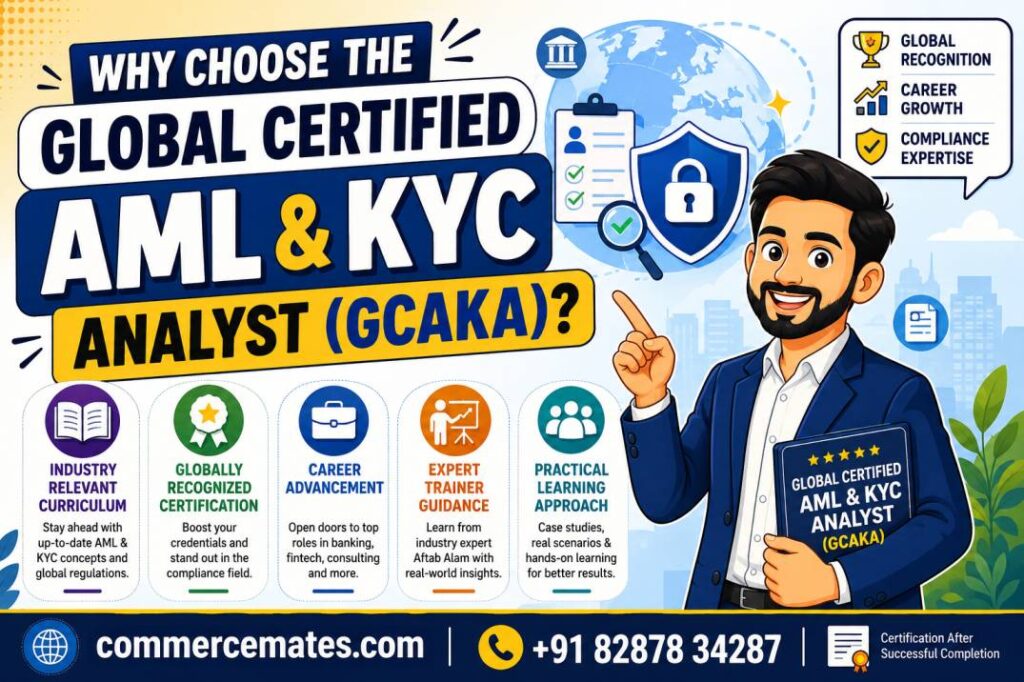
Global Certified AML & KYC Analyst (GCAKA)
Global Certified AML & KYC Analyst (GCAKA) certificate is provide by commercemates.com with practical and simulation based classes.
When Banks Do Require Certification
Several situations may make certification mandatory:
Regulatory pressure: Some jurisdictions have specific requirements. For example, certain US states require AML certification for money services businesses.
High-risk banking activities: Banks dealing with higher-risk customers or operating in jurisdictions with elevated money laundering risks often require certified compliance staff.
Internal policy: Many major banks have made certification a prerequisite for compliance roles as part of their risk management strategy.
Career advancement: Even when not required, certification is often necessary for promotion to senior compliance positions.
The Benefits of Certification Beyond Requirements
Whether required or not, AML certification offers significant advantages:
- Deepened expertise: Certification programs provide comprehensive knowledge beyond what internal training can offer
- Career mobility: Certified professionals command higher salaries and more opportunities
- Professional credibility: Certification demonstrates commitment to ethical standards
- Network building: Professional associations provide valuable connections
- Updated knowledge: Ongoing education requirements keep professionals current
What If You Don’t Have Certification?
If you’re working in a compliance role without certification, don’t panic. Many banks hire qualified professionals and support them in obtaining certification within a reasonable timeframe—often within 6-12 months of employment. Some banks even cover the costs of certification programs as part of professional development.
The Cost and Commitment
Be aware that AML certification requires significant investment. Costs typically range from $1,000 to $5,000, plus ongoing fees for membership and continuing education. Most certifications also require passing rigorous examinations and maintaining credentials through annual continuing education credits.
The Bottom Line
While regulatory requirements don’t explicitly demand AML certification for all bank employees, the practical reality is that serious AML professionals need certification to advance their careers. For compliance officers and specialized roles, certification is effectively mandatory. For other staff, certification is optional but highly beneficial.
If you’re serious about a career in banking compliance, pursuing AML certification isn’t just about meeting requirements—it’s about demonstrating your expertise and commitment to fighting financial crime. The investment in time and money often pays for itself many times over through career advancement opportunities and professional recognition.
Final Thoughts for Banking Professionals
The AML landscape continues to evolve rapidly with new technologies, emerging threats, and changing regulations. Whether certification is a requirement or a personal career choice, staying current with AML best practices is non-negotiable for banking professionals. In today’s regulatory environment, AML expertise isn’t just an asset—it’s a necessity.